
Key Takeaways
- Old carpet, underlay, laminate, hardwood, vinyl, and tile don’t always have the same disposal requirements in Kamloops.
- Start by identifying your flooring type and checking for possible hazardous materials before pulling anything up.
- Roll up old carpet, keep flooring materials separated, and secure your load before heading to the landfill.
- Mission Flats Landfill accepts construction and renovation waste, but disposal fees depend on the material and how it’s sorted.
- Older vinyl flooring and floor-levelling compounds may contain asbestos and need special testing and handling.
- Small flooring jobs can be manageable yourself, but professional junk removal can save time when you’re dealing with a room full of heavy debris.
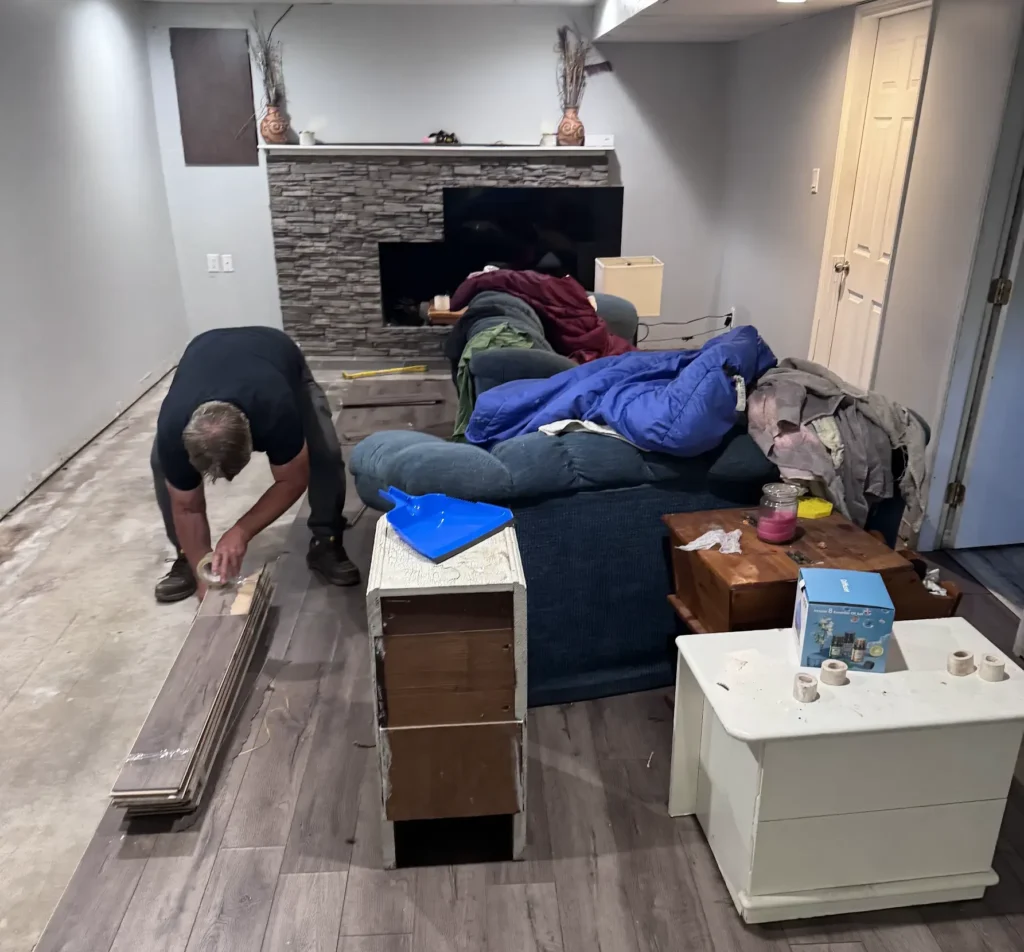
You’ve finally decided to replace that old carpet in your living room. Maybe it’s been there since you bought the house, or maybe you’re pulling up worn-out laminate to give your basement a fresh look.
The new flooring is the exciting part. Getting rid of the old stuff? Not so much.
Here’s the short answer: carpet and flooring disposal in Kamloops starts with knowing what you’re removing, separating the materials, and finding the right disposal facility. You can haul smaller amounts yourself, but large piles of carpet, underlay, and broken flooring can quickly become more work than you expected.
As the owner of Kamloops Junk Haulers, I know that flooring projects don’t end when the new floor goes down. You’ve still got rolls of dusty carpet, piles of old underlay, and maybe a stack of damaged laminate sitting in your garage.
Whether you’re updating a basement in Sahali, replacing bedroom carpet in Aberdeen, or renovating a rental property in North Kamloops, here’s how to deal with the old flooring without turning cleanup into another weekend project.
What Types of Old Flooring Can You Dispose of in Kamloops?
Before you start loading anything into your truck, figure out exactly what you’re dealing with.
Not all flooring is the same, and disposal requirements can vary depending on the material.
Carpet and underlay: Old carpet, padding, and tack strips are common waste from bedroom, living room, and basement renovations. Carpet can take up a surprising amount of space once it’s pulled up.
Laminate flooring: Laminate planks are often made from layers of wood fibre and other materials. They generally can’t go into the same recycling stream as clean, untreated lumber.
Hardwood flooring: Solid wood flooring may sometimes be reused or reclaimed if it’s in good condition. Painted, glued, or engineered flooring can be harder to recycle.
Vinyl flooring: Sheet vinyl and vinyl tiles need extra attention, especially in older homes. Some older flooring and adhesives may contain asbestos.
Ceramic and porcelain tile: Broken tiles are heavy, sharp, and difficult to move in large amounts. They should be kept separate from lighter flooring materials.
Here’s what I tell homeowners: don’t assume everything from your flooring project can go into one big pile. A little sorting now can save you trouble at the dump.
How to Get Rid of Old Carpet and Flooring in 7 Steps
Whether you’re replacing one bedroom’s carpet or tearing out flooring throughout your house, the basic process is similar.
Step 1: Identify Your Flooring Before Removing It
First things first: find out what kind of flooring you have and roughly how old it is.
This is especially important if you’re renovating an older home in neighbourhoods like Valleyview, North Kamloops, or Westsyde.
Some older flooring materials may contain asbestos. You can’t tell just by looking at them.
Before cutting or breaking apart old vinyl flooring, check when it was installed. If you’re unsure about its age or materials, have it assessed by a qualified professional.
Don’t sand, grind, or tear up flooring that might contain asbestos.
For newer flooring that doesn’t have hazardous material concerns, you can start planning the removal.
I also recommend measuring your rooms before you begin. Knowing how much flooring you’re taking out makes it easier to estimate how much space you’ll need for disposal.
Step 2: Clear the Room and Prepare Your Work Area
You don’t want to start pulling up carpet while you’re still climbing over furniture.
Move couches, tables, chairs, and other belongings out of the room first.
If you’re working in a basement, make sure the stairs and doorways are clear. You’ll need enough space to carry old flooring outside safely.
Here’s what I recommend having ready:
- Heavy-duty work gloves
- Safety glasses
- Suitable work shoes
- A utility knife for carpet that’s confirmed safe to cut
- Pliers or a pry bar where appropriate
- Strong tape or straps
- Dust protection suitable for the material
- A clear area for stacking removed flooring
Keep kids and pets away from the work area.
And don’t forget about those carpet tack strips. They’re covered in sharp little nails that have a talent for finding the bottom of your shoe.
Set them aside in a sturdy container or wrap them securely so nobody gets hurt.
Step 3: Roll Up Old Carpet Into Manageable Sections
If you’re removing regular carpet that’s safe to handle, don’t try to carry one giant piece out of the house.
It might look manageable while it’s lying flat, but once you roll it up, you’ll understand why.
Old carpet is bulky. It can also be surprisingly heavy, especially if it’s been exposed to moisture.
Here’s an easier approach:
- Carefully pull up the carpet from one edge.
- Cut it into smaller, manageable sections if it’s safe to do so.
- Roll each section tightly.
- Secure the rolls with strong tape or straps.
- Stack them in a dry area until you’re ready for disposal.
Keep the carpet underlay separate if you can.
If you’re dealing with wet carpet from a flooded basement, wear suitable protection and avoid keeping mouldy materials inside the house longer than necessary. Large mould problems should be assessed by a qualified professional.
For smaller flooring jobs, rolling everything up properly can make loading much easier.
For an entire house? Well, you might end up with more carpet rolls than you have room for in the truck.
Step 4: Separate Laminate, Hardwood, Vinyl, and Tile
This is where a little organization pays off.
If you’ve removed several types of flooring, don’t mix them all together.
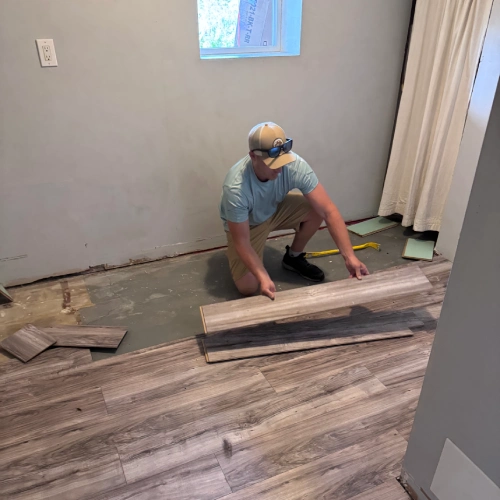
Make separate piles for laminate, hardwood, carpet, underlay, tile, and other materials.
Laminate flooring
Stack the planks neatly and keep them separate from clean wood. Laminate often contains adhesives and other materials, so don’t assume it’s accepted in wood recycling.
Hardwood flooring
If the wood is in good condition, see whether it can be reused or donated. Some older hardwood floors are worth saving.
If it’s damaged, glued down, or covered in coatings, check whether your disposal facility accepts it as wood waste or general construction waste.
Vinyl flooring
Be careful with older vinyl tiles, sheet flooring, and adhesives. If the age or asbestos status is uncertain, stop and have the material assessed before disturbing it.
Ceramic and porcelain tiles
Keep broken tiles in sturdy containers or manageable piles.
Don’t overload boxes. A small box of ceramic tile can weigh much more than you’d expect.
And watch those sharp edges.
Mixing flooring with drywall, lumber, and other renovation materials may increase disposal costs. For more details, check our guide on construction debris removal in Kamloops.
Step 5: Check Kamloops Disposal Rules Before Loading Your Vehicle
Here’s a mistake that’s easy to avoid: loading up the truck before checking where everything needs to go.
The City of Kamloops has different requirements for construction and demolition waste.
According to the City of Kamloops’ Mission Flats Landfill information, the landfill accepts construction waste and charges different rates depending on the type of material.
The location is:
Mission Flats Landfill
3095 Mission Flats Road, Kamloops, BC
Before visiting, check current hours, fees, and material restrictions.
You should also know that mixed construction loads can cost more than properly separated materials.
If you’re disposing of carpet, underlay, laminate, and broken tiles together, contact the facility or check the City’s Waste Wise information to confirm how they should be handled.
Don’t assume old carpet belongs in your regular household recycling bin. Most carpet and underlay need disposal through an appropriate waste facility unless a specialized recycler confirms they’ll accept them.
A quick check before leaving home can save you a wasted trip.
Step 6: Secure Your Flooring Waste Before Transporting It
Now comes the hauling.
If you’ve got a pickup truck or trailer, make sure everything is loaded safely.
Carpet rolls can shift around. Loose laminate planks can slide. Broken tiles can spill out of weak containers.
You don’t want to be the person leaving pieces of flooring along the road on the way to Mission Flats.
Here’s what I recommend:
- Keep carpet rolls tightly secured.
- Stack flooring planks flat when possible.
- Place heavy tiles at the bottom of the load.
- Use strong containers for small, sharp pieces.
- Cover and secure the load with appropriate straps or a tarp.
- Stay within your vehicle’s rated payload and trailer limits.
If you’ve removed flooring from several rooms, you might need more than one trip.
That’s when it’s worth thinking about whether the time and effort are really worth it.
You can also arrange professional hauling if you’d rather not load and transport everything yourself.
Step 7: Clean Up the Remaining Debris
Once the old flooring is gone, you’re almost finished.
But don’t forget about what’s left behind.
You might still have nails, staples, underlay scraps, dust, and pieces of broken flooring around the room.
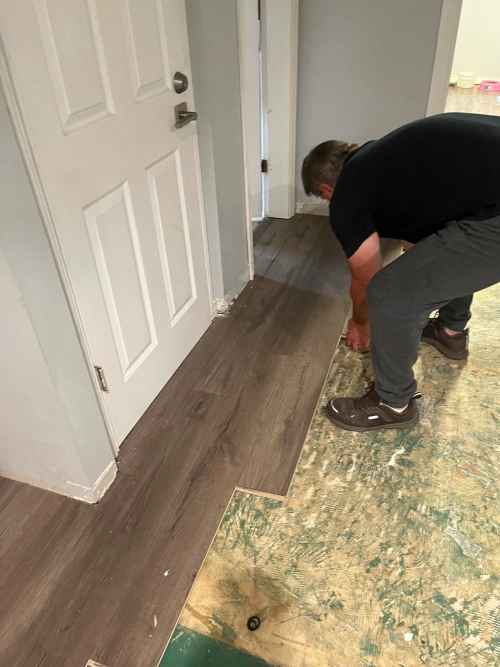
Walk through the area carefully and check along the walls, corners, and doorways.
Pick up sharp materials before sweeping or vacuuming with equipment suitable for the dust involved.
If you’re replacing flooring in a basement, check for moisture damage before installing anything new. It’s much easier to fix a damp subfloor now than after your new flooring is installed.
And if your renovation has left you with old furniture, cabinets, or other unwanted items, it may make sense to clear everything at the same time.
Our debris removal service in Kamloops can help with approved flooring and renovation waste, including loading and hauling.
That way, you can get back to the part of the renovation you actually wanted to do.
Can You Recycle Old Carpet and Flooring in Kamloops?
Some flooring materials can be reused or recycled, but it depends on their condition and what local facilities accept.
Here’s a simple breakdown:
| Flooring material | Disposal or reuse options |
|---|---|
| Old carpet | Typically requires disposal unless a specialized recycler accepts it |
| Carpet underlay | Check for specialized recycling; otherwise use an approved disposal facility |
| Laminate flooring | Usually construction waste; don’t assume it’s recyclable with clean wood |
| Solid hardwood | May be reusable or accepted by a suitable wood recycler |
| Vinyl flooring | Check age and asbestos requirements before removal or disposal |
| Ceramic and porcelain tile | Ask whether the facility accepts it with suitable aggregate or construction waste |
If your old flooring is still in good condition, consider selling it or offering it for reuse.
Solid hardwood planks and leftover unopened flooring boxes may be useful to someone doing a small renovation.
But don’t spend a whole weekend trying to save materials that are badly damaged or unsafe.
And remember, not everything collected by a junk removal company automatically goes to the landfill.
In our post on what happens to junk after pickup in Kamloops, we explain how reusable items and recyclable materials are sorted whenever suitable options are available.
Important: Watch for Asbestos in Older Vinyl Flooring
If there’s one thing I want homeowners to remember, it’s this: don’t start ripping up old vinyl flooring without knowing what you’re dealing with.
Some older vinyl floor tiles, sheet flooring, adhesives, and levelling compounds may contain asbestos.
The City of Kamloops’ asbestos abatement and safe disposal guidelines identify vinyl flooring and levelling compound as potential asbestos-containing materials.
Under the City’s rules, these materials from buildings constructed before 1990 are treated as asbestos-containing unless appropriate assessment and test results establish otherwise.
The City also requires an asbestos declaration for applicable potential asbestos-containing waste and has specific disposal procedures.
Here’s my advice:
If you’re unsure whether your old flooring contains asbestos, don’t disturb it until a qualified professional has assessed it.
That means no sanding, breaking tiles, scraping old adhesive, or tossing suspicious flooring into regular construction waste.
Asbestos removal isn’t a regular junk removal job. It requires proper assessment, training, and handling.
Once the material has been handled appropriately and you’re left with approved non-hazardous renovation debris, a junk removal company can help with the remaining cleanup.
How Much Does Carpet and Flooring Disposal Cost in Kamloops?
The cost depends on what you’re removing, how much there is, and whether you’re handling the work yourself.
For a small bedroom, you might be able to roll up the carpet and take it to an approved disposal facility in your own vehicle.
But if you’re replacing carpet throughout the house or removing heavy tile from a kitchen and bathroom, the job gets bigger quickly.
The main factors that affect the price are:
Amount of flooring: More carpet rolls, underlay, and planks mean more volume to haul.
Material weight: Tile and some hardwood flooring can be much heavier than carpet.
Access: Removing flooring waste from a basement or upper floor can involve more carrying and stairs.
Sorting requirements: Some materials need separate handling or disposal.
Labour: If you need help moving, loading, and hauling the debris, that affects the overall cost.
For DIY disposal, Mission Flats Landfill publishes its current tipping fees online. Construction waste has different rates from regular household garbage, and mixed loads can be charged at a higher rate.
Professional junk removal pricing will depend on the job.
At Kamloops Junk Haulers, we recommend getting a quote based on the type and amount of flooring you need removed.
If you can send photos of the material and tell us where it’s located, that can help us understand the job before providing an estimate.
Should You Dispose of Old Flooring Yourself or Hire a Junk Removal Company?
Let’s be realistic. Not every flooring project needs professional hauling.
If you’re replacing carpet in one small bedroom and have a suitable vehicle, doing it yourself might make sense.
But if you’re dealing with an entire basement, several bedrooms, or piles of heavy tile and laminate, the cleanup can take longer than expected.
Here’s how the options compare:
| DIY disposal | Professional junk removal |
|---|---|
| Better for smaller amounts | Useful for larger flooring projects |
| You handle all loading | Crew loads approved materials |
| Requires a suitable vehicle | Hauling is included |
| You arrange landfill trips | Disposal is handled for you |
| You pay disposal fees and transport costs | You receive a quote for removal |
| Takes your own time and effort | Saves time and heavy lifting |
The biggest thing to think about is how much waste you’ve actually got.
One room of carpet? Probably manageable.
Old carpet, underlay, broken laminate, and flooring from an entire house? That’s a different story.
If you’d rather focus on getting your new floors installed, Kamloops Junk Haulers can help take care of the unwanted flooring materials we accept.
Frequently Asked Questions About Carpet and Flooring Disposal in Kamloops
Can I put old carpet in my regular garbage bin?
Small quantities may be subject to regular garbage collection limits, but large carpet rolls generally aren’t practical for curbside pickup. Check the City’s collection rules before putting carpet in your bin.
For larger amounts, use an approved disposal facility or arrange junk removal.
Where can I dispose of old carpet in Kamloops?
Mission Flats Landfill is a local option for construction and renovation waste. Confirm the current acceptance rules for your carpet and underlay before visiting.
You can also hire a junk removal company to haul accepted flooring materials.
Can laminate flooring be recycled?
Laminate flooring is made from several bonded materials, so it generally isn’t accepted with clean, untreated wood.
Check local recycling options before disposal. Don’t put laminate planks into regular household recycling.
How do I dispose of old vinyl flooring?
First, find out when the flooring was installed and whether it may contain asbestos.
Older vinyl flooring may require professional assessment and special disposal procedures. Don’t break or remove suspicious material until it’s been checked.
Can a junk removal company take old carpet and flooring?
Yes. Kamloops Junk Haulers handles approved carpet, flooring, and renovation debris.
Let us know the material type, amount, and where it’s located. We can confirm what we can accept and provide a quote.
Do I need to remove the carpet myself before booking junk removal?
Our debris removal service focuses on loading and hauling removed materials. If your carpet is still installed, contact us first to confirm whether removal from the floor is part of the service you need.
Ready to Get Rid of Old Carpet and Flooring in Kamloops?
Replacing old flooring can make a huge difference in your home. But once the new carpet, laminate, or hardwood is installed, the last thing you want is a garage full of dusty rolls and broken planks.
Start by checking what materials you’re dealing with, separate them properly, and choose the right disposal option.
If you’ve only got a small amount, you might be able to handle it yourself.
But if you’ve got piles of carpet, underlay, laminate, and other renovation debris taking up space, we’re happy to help.
At Kamloops Junk Haulers, we provide debris removal for homeowners and contractors throughout Kamloops, including Aberdeen, Sahali, Westsyde, Valleyview, North Kamloops, and surrounding areas.
We’ll help with the lifting, loading, hauling, and proper disposal of approved materials so you can enjoy your newly renovated space.
Call or text (250) 571-6745 or get your free junk removal quote.
You’ve got new floors to enjoy. Let us deal with the old ones.