Key Takeaways
- If your old shed is leaning, rotting, or falling apart, it’s worth dealing with before winter makes the job harder.
- Shed removal in Kamloops starts with checking the structure, confirming permit requirements, and clearing everything inside.
- Wood, metal, roofing shingles, and concrete have different disposal rates at Kamloops facilities. Keeping them separate can save money.
- Older sheds may contain hazardous materials. Don’t tear into suspicious roofing, siding, or insulation without having it checked.
- Small shed cleanouts and hauling jobs may be manageable yourself, but unstable structures and heavy demolition work are better left to qualified professionals.
- Kamloops Junk Haulers can help with approved shed debris, old lumber, and unwanted items once they’re ready for removal.
That old shed in your backyard has probably seen better days. Maybe the roof leaks, the door barely closes, or the whole thing leans a little more every year.
You’ve been meaning to deal with it, but somehow there’s always something else to do. Now winter’s coming, and you’re wondering whether that shed will make it through another season.
Here’s the short answer: shed removal in Kamloops starts with emptying the structure, checking whether it’s safe to dismantle, and making a plan for the debris. If the shed is unstable or has electrical connections, get qualified help before taking it apart. Once the materials are safely removed, you can haul them to an approved disposal facility or hire a junk removal company.
As the owner of Kamloops Junk Haulers, I know how quickly outdoor storage areas can turn into a collection of broken tools, old lumber, gardening supplies, and things nobody remembers putting there.
Whether you’re clearing a shed in Sahali, cleaning up a backyard in Westsyde, or tackling an old workshop in Aberdeen, here’s how to get the job done before the snow arrives.
How to Remove an Old Shed in Kamloops: 7 Steps
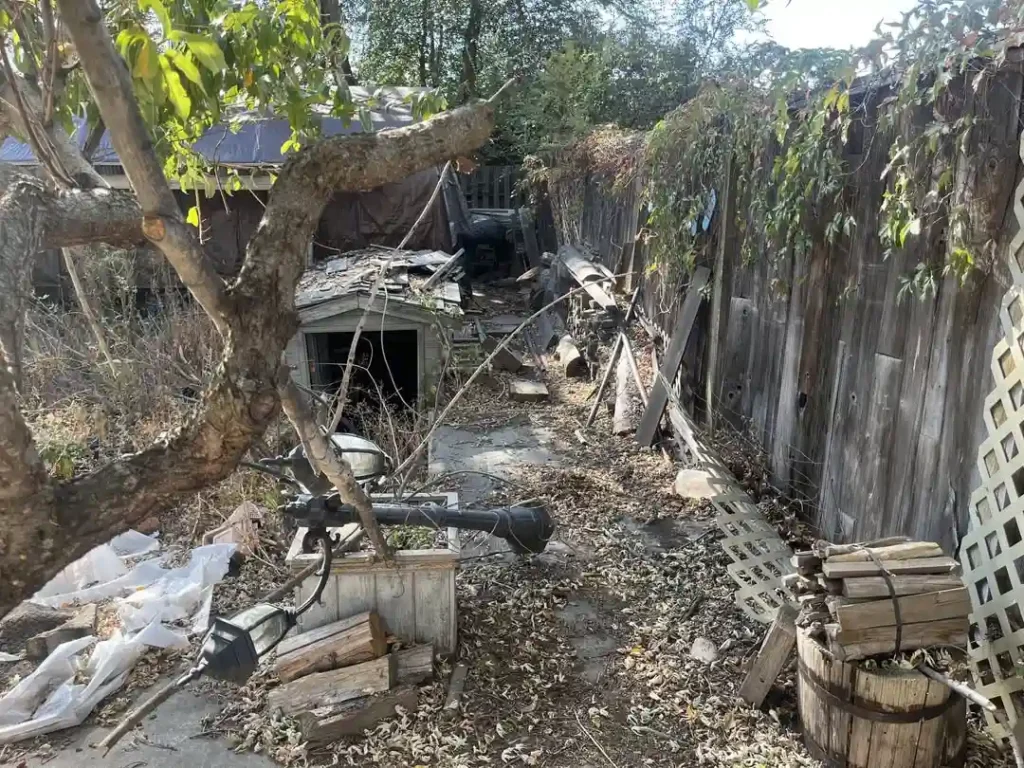
Getting rid of a shed isn’t quite the same as getting rid of an old couch. You’ve got the building itself, whatever’s stored inside, and possibly a foundation underneath.
Here’s how I’d approach the job.
Step 1: Decide Whether Your Shed Needs to Go
Before grabbing a hammer, take a good look at the shed.
Is the roof damaged? Are the walls rotting? Does the floor feel soft when you walk on it? Or is the shed still solid but just full of stuff you don’t use?
Not every old shed needs to be torn down.
If the structure is in reasonable condition, you might be able to repair it, sell it, or give it away to someone willing to move it.
But there are signs that removal may be the better option:
- The walls are leaning or visibly unstable.
- The roof is sagging or has serious water damage.
- Wooden supports or flooring are badly rotted.
- The structure has major damage from pests or moisture.
- Repairing it would cost more than it’s worth.
- You no longer need the shed and want the yard space back.
Here’s what I usually recommend: figure out whether you’re dealing with a storage problem or a building problem.
If the shed is solid but packed with unwanted junk, a cleanout might be all you need.
If it’s falling apart, that’s a different job.
And if the structure looks like it might collapse, don’t go inside to investigate. Have a qualified professional assess it first.
Step 2: Check Permits and Safety Requirements
This is the part homeowners sometimes skip.
Before demolishing an old shed, check whether you need a permit.
According to the City of Kamloops’ building permit FAQ, a separate demolition permit is generally required when demolishing a building, unless the work is included in an active reconstruction permit.
You might have heard that small garden sheds don’t need building permits.
That’s true for certain new residential accessory buildings under 10 square metres (108 square feet), but the rule about constructing a small shed isn’t automatically an exemption from demolition requirements.
It’s worth checking with the City before starting.
You should also find out whether the shed has any electrical, water, or gas connections.
Don’t disconnect electrical wiring yourself unless you’re qualified to do so. Arrange for the proper utility disconnection before demolition.
And one more thing: if you’ve got an older shed, be careful with roofing, siding, insulation, and other building materials.
Some older products may contain asbestos or lead.
If you’re unsure what’s in the structure, have the materials assessed before disturbing them. Cutting, breaking, or tearing apart hazardous materials can create serious exposure risks.
A shed cleanout is a weekend project. Hazardous-material removal isn’t.
Step 3: Empty Everything Inside the Shed
Now comes the part nobody looks forward to.
Open the shed door and take a look at what’s actually inside.
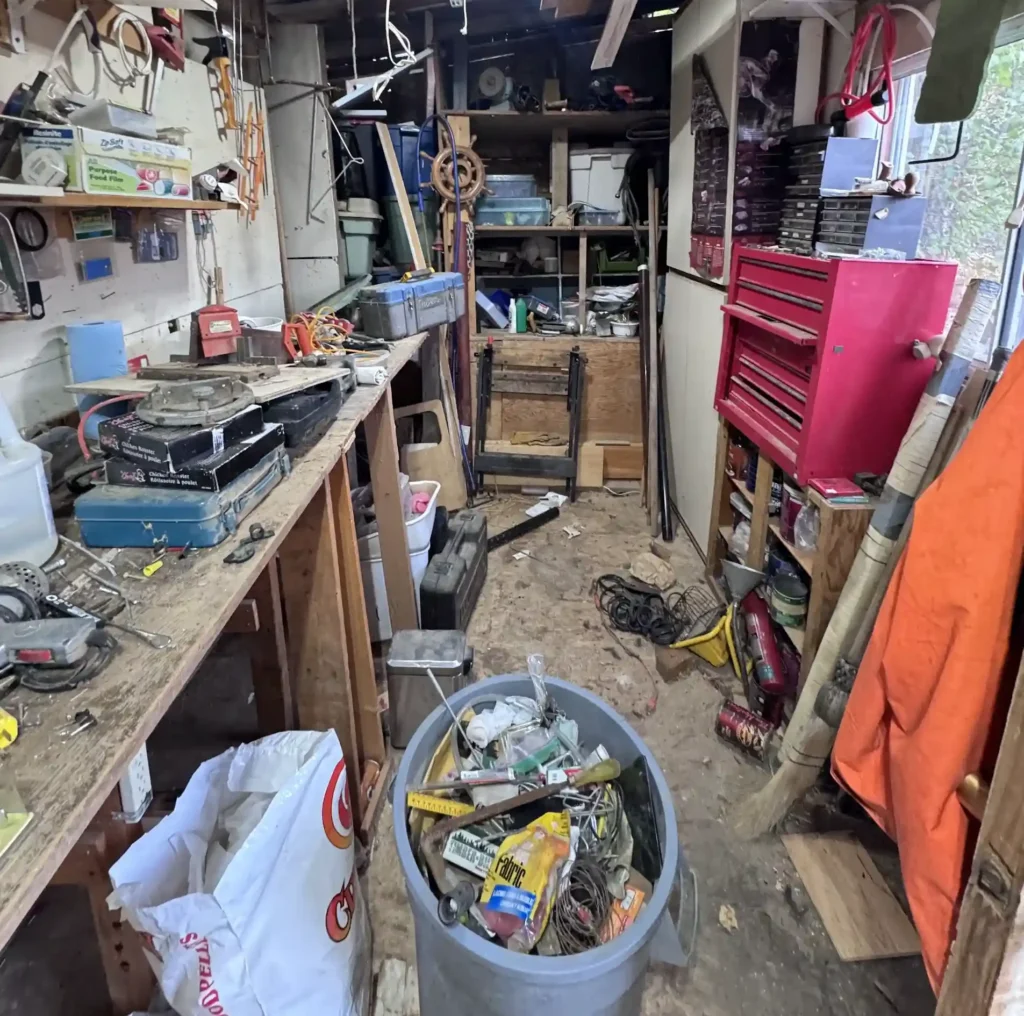
Old lawnmowers. Broken rakes. Half-empty paint cans. Spare fence boards. A collection of screws that might come in handy someday.
Sound familiar?
Before anything gets dismantled, you need to clear out the contents.
I recommend sorting everything into four groups:
Keep: Tools, gardening equipment, and supplies you still use.
Donate or sell: Working lawn equipment, hand tools, and storage shelves that someone else could use.
Recycle: Scrap metal, accepted electronics, batteries, and other recyclable materials.
Junk: Broken equipment, damaged storage bins, unusable furniture, and things that can’t reasonably be repaired or reused.
Start with smaller items so you have room to move around.
Then deal with larger things like workbenches, shelving units, and lawn equipment.
Be careful with old paint, gasoline, propane cylinders, pesticides, and other hazardous products.
These don’t belong in a regular load of shed debris. They need to go to an appropriate collection facility.
If the shed is unsafe to enter, don’t try to empty it yourself. Let a qualified professional determine how the contents can be removed safely.
And if you discover you’ve got more junk than expected, you’re not alone. Outdoor sheds have a way of becoming storage spaces for everything that doesn’t fit in the garage.
Step 4: Prepare the Shed for Safe Dismantling
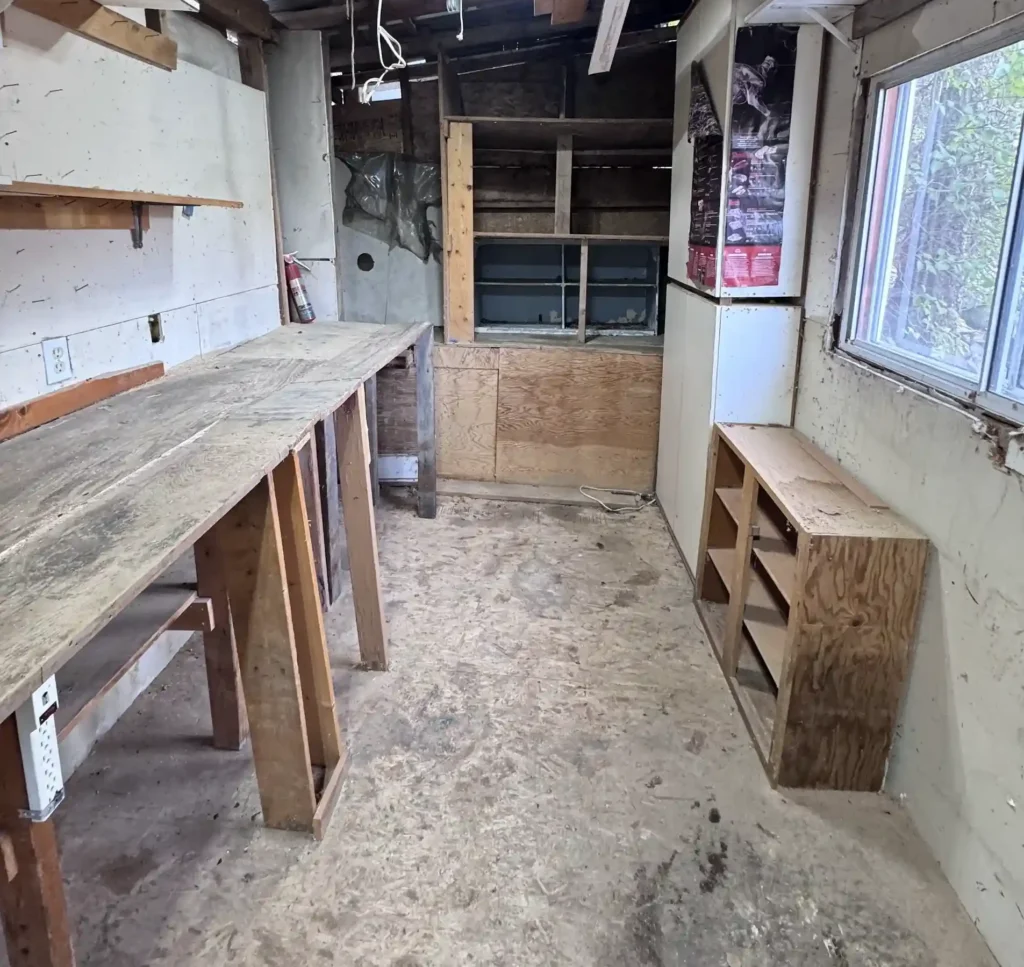
Once the shed is empty, you can get a much better idea of what you’re dealing with.
Check the roof, walls, framing, and foundation from a safe position.
Look for damaged supports, rotten wood, loose roofing, and anything that could fall unexpectedly.
If the structure is stable, small, and made from simple materials, an experienced homeowner may be able to handle some preparation work.
But don’t underestimate the risks.
A wall that looks solid might be held together by a few old nails. Roof panels can be heavy, and damaged wood doesn’t always behave the way you expect.
Here’s what I recommend before any dismantling begins:
- Confirm the required permits and hazardous-material assessments.
- Make sure utilities have been disconnected by the appropriate professionals.
- Keep children and pets away from the work area.
- Clear a safe path for workers and debris removal.
- Protect nearby fences, windows, and landscaping.
- Have a plan for where the removed materials will go.
Don’t try to pull down an unstable structure with a truck or rope. That’s a good way to turn an old shed into a much bigger problem.
For larger sheds, damaged roofs, concrete foundations, or structures close to your house or fence, hiring a qualified demolition contractor is usually the safer option.
Once the shed has been properly dismantled, you can focus on getting the debris off your property.
Step 5: Separate Wood, Metal, Roofing, and Concrete
Here’s where shed disposal can get expensive if you don’t plan ahead.
An old shed might leave you with several different types of waste:
- Wooden framing and wall panels
- Painted or treated lumber
- Metal roofing and siding
- Asphalt roofing shingles
- Broken shelving and workbenches
- Concrete blocks or foundation pieces
- Nails, brackets, and other scrap metal
Instead of tossing everything into one mixed pile, keep the materials separated wherever practical and safe.
Why?
Because Kamloops disposal facilities charge different rates for different kinds of construction waste.
For example, the City of Kamloops lists separate rates for source-separated wood waste, asphalt roofing, and crushable aggregate such as concrete.
Mixed construction loads are generally charged at a higher rate.
That doesn’t mean every piece of old wood can go into a recycling pile.
Painted wood, treated lumber, and wood from older structures may have different requirements. Some materials need special handling.
Check the receiving facility’s rules before loading your truck.
And don’t start breaking up suspicious materials just to make them fit.
If you’re tackling a bigger backyard renovation, our guide on construction debris removal in Kamloops explains how different materials are handled and why sorting matters.
Step 6: Arrange Shed Debris Removal in Kamloops
Once the shed has been safely dismantled and the materials are separated, you need to get everything off your property.
You’ve generally got two options.
Option 1: Haul the debris yourself
If you’ve got a suitable truck or trailer and the load is manageable, you can take approved materials to a local disposal facility.
Two options in Kamloops are:
Mission Flats Landfill
3095 Mission Flats Road, Kamloops
The City accepts various construction and demolition materials, with different disposal rates depending on the type and sorting.
Kamloops Resource Recovery Centre
400 Owl Road, Kamloops
This facility accepts demolition, land-clearing, and construction waste but does not accept recycling or potential asbestos-containing materials.
Before heading out, check the current hours, fees, and accepted materials.
Make sure your trailer isn’t overloaded, and secure everything properly.
Loose plywood, roofing sheets, and lumber can become dangerous if they shift or blow off during transport.
Option 2: Hire a junk removal company
If you’ve got a big pile of wood, roofing materials, and other approved debris sitting in the backyard, professional hauling can save you a lot of work.
This is where we can help.
Our debris removal service in Kamloops includes loading, hauling, and responsible disposal of approved construction and outdoor project waste.
You don’t need to spend your weekend making repeated dump runs.
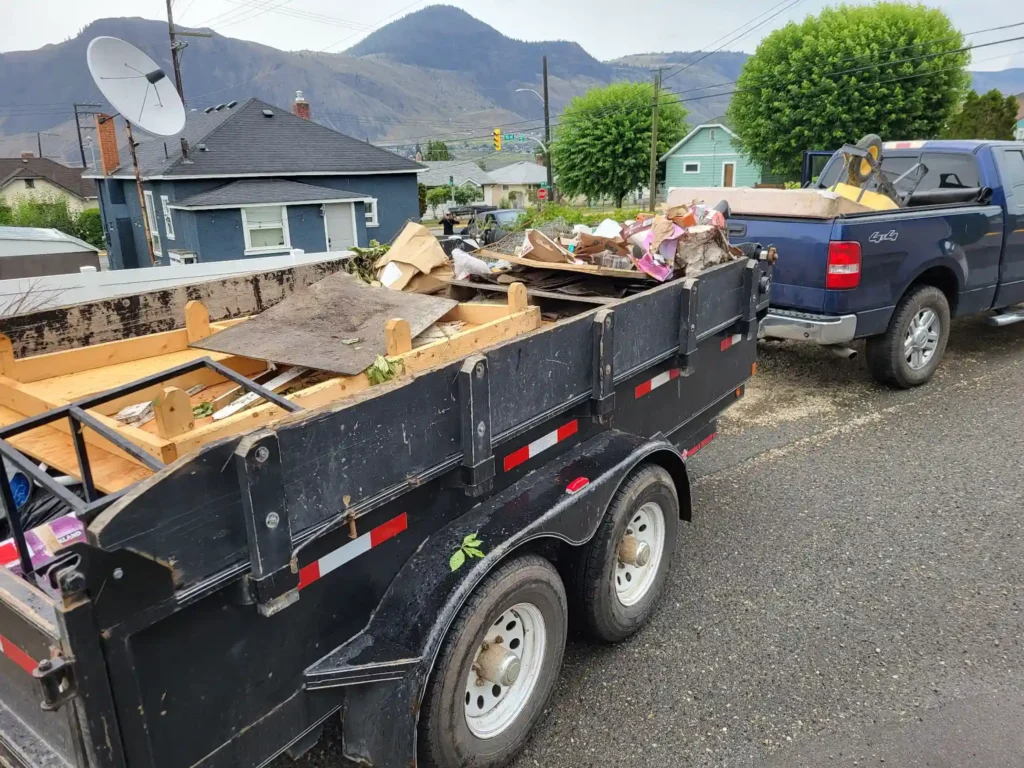
One thing to clarify: demolition and debris removal aren’t always the same service.
If your shed is still standing, contact us first to discuss what needs to be done. We can confirm what hauling work we can handle and whether you’ll need a separate demolition contractor.
If it’s already safely dismantled, send us some photos of the materials and where they’re located.
That makes it easier to assess the job and provide a quote.
Step 7: Clean Up the Area Before Winter
Once the shed and debris are gone, don’t forget about the ground underneath.
You might have leftover nails, broken wood, concrete blocks, or an uneven patch of dirt where the shed used to sit.
Before winter, take some time to make the area safe.
Here’s what I’d check:
- Remove loose nails, screws, and sharp debris.
- Pick up leftover wood and roofing scraps.
- Check for exposed concrete or foundation pieces.
- Fill or secure holes and other trip hazards.
- Make sure water can drain away from your house.
- Clear leaves and branches from the surrounding area.
If you’re planning to build a new shed in spring, you don’t necessarily need to finish the landscaping right away.
But you should make sure the area is safe and won’t collect standing water when the snow melts.
And if removing the shed has revealed another pile of old lumber or broken outdoor furniture behind it, now’s a good time to deal with that too.
No point clearing one mess just to leave another one sitting beside it all winter.
Where Can You Dispose of Old Shed Materials in Kamloops?
If you’re hauling shed debris yourself, it’s worth knowing where the materials can go.
The City of Kamloops operates disposal facilities with separate rates for different construction materials.
Here are some of the published 2026 rates:
| Material | Mission Flats Landfill | Resource Recovery Centre |
|---|---|---|
| Source-separated wood waste | $150/tonne | $100/tonne |
| Source-separated asphalt roofing | $125/tonne | $75/tonne |
| Source-separated crushable aggregate | $30/tonne | $25/tonne |
| Unseparated construction waste | $250/tonne | $250/tonne |
These are disposal rates, not junk removal service prices. Minimum charges, acceptance conditions, and special handling fees may also apply.
Check the official facility pages before making a trip:
The big takeaway? Keep suitable materials separate whenever possible.
And if you’re unsure whether a particular material is accepted, call the facility before loading it.
How Much Does Old Shed Removal Cost in Kamloops?
This is usually one of the first questions homeowners have.
And the answer depends on what kind of shed you’re removing.
A small, already-dismantled wooden shed is a very different job from a large workshop with electrical wiring, heavy roofing, and a concrete foundation.
The biggest factors affecting shed removal costs are:
Shed size: Larger sheds generally create more waste and require more work.
Building materials: Wood, metal, roofing shingles, and concrete have different weights and disposal requirements.
Condition: A badly damaged or unstable shed may need professional demolition.
Accessibility: A backyard with a wide gate is easier to access than a shed tucked behind a narrow fence or down a steep slope.
Labour: Dismantling a structure and hauling away an existing debris pile are different jobs.
Disposal fees: The final cost depends partly on the types and amounts of material being discarded.
Here’s what I recommend: get a quote before starting.
Take a few clear photos of the shed, measure its approximate length and width, and let the company know whether it’s still standing or already dismantled.
At Kamloops Junk Haulers, we can provide an estimate for the approved debris removal work based on the materials and access.
That way, you know what you’re paying for before the hauling begins.
Should You Remove an Old Shed Yourself or Hire Professionals?
Let’s be realistic about what makes sense.
If you’ve got a small, stable shed with no hazardous materials or utility connections, you may be able to handle the cleanout and some of the work yourself, provided you have the right experience and approvals.
But if the roof is sagging, the walls are leaning, or the shed has been sitting in poor condition for decades, that’s not something I’d recommend tackling alone.
Here’s a quick comparison:
| DIY shed removal | Professional help |
|---|---|
| May work for small, safe projects | Better for large or unstable structures |
| You handle tools and labour | Qualified contractors handle demolition work |
| You sort and transport the waste | Junk removal crews can haul approved debris |
| Requires a suitable vehicle | Hauling equipment is provided |
| You arrange disposal | Disposal can be included in the removal quote |
One thing people underestimate is how much debris a small shed can create.
Once the walls, roof, shelves, and framing are taken apart, you’ve suddenly got a pretty big pile of material.
If you don’t have a suitable truck or trailer, removing everything can take several trips.
That’s why some homeowners choose to arrange demolition separately and hire a junk removal company for the cleanup.
It’s a practical way to divide the job.
For more advice on hauling large loads, check our guide on how to get rid of large amounts of waste in Kamloops.
Frequently Asked Questions About Shed Removal in Kamloops
Do I need a permit to demolish an old shed in Kamloops?
The City of Kamloops generally requires a demolition permit to remove a building, unless the demolition is covered by an active reconstruction permit.
Requirements can depend on the structure and project. Contact the City’s Building Section before starting, even if the shed was small enough to be built without a building permit.
Where can I dispose of an old wooden shed in Kamloops?
Mission Flats Landfill and the Kamloops Resource Recovery Centre accept certain construction and demolition materials, including eligible wood waste.
Check accepted materials, sorting requirements, and disposal fees before visiting.
If you’ve got more debris than you can transport, a junk removal company can help haul approved materials.
Can I put shed wood and roofing shingles in the same load?
You may be able to dispose of mixed construction materials, but they can be charged at higher rates than properly separated loads.
Keeping eligible wood waste and asphalt roofing separate can help reduce disposal costs.
Always follow the receiving facility’s sorting requirements.
Can Kamloops Junk Haulers remove an already-dismantled shed?
Our debris removal service covers approved wood, construction waste, and outdoor project debris.
If your shed has already been safely dismantled, contact us with photos and details about the materials.
We’ll confirm what we can accept and provide a quote for the hauling work.
Is fall a good time to remove an old shed?
Fall can be a practical time to deal with a deteriorating shed, especially if you’re concerned about snow, ice, or limited backyard access during winter.
The key is to make sure conditions are safe and that you have any necessary permits and qualified help before work begins.
Don’t rush a hazardous demolition just because winter is approaching.
Ready to Get Rid of Your Old Shed Before Winter?
That old shed doesn’t have to sit in your backyard forever.
Whether it’s falling apart, taking up valuable space, or simply full of things you no longer need, the first step is making a plan.
Check the structure, sort the contents, confirm the safety requirements, and decide how you’ll deal with the debris.
If you’ve got old lumber, roofing materials, broken shelving, or other approved waste ready to go, we’re happy to help with the cleanup.
At Kamloops Junk Haulers, we serve homeowners and property managers throughout Kamloops, including Sahali, Aberdeen, Westsyde, Valleyview, Brocklehurst, and surrounding neighbourhoods.
We’ll help with the lifting, loading, hauling, and proper disposal of accepted materials so you can get your yard back.
Call or text (250) 571-6745 or request a free debris removal quote.
Let’s clear out that old shed debris before winter gets in the way.